MindHaven
¡¡ Campaign finished !!
Thank you very much for your support, together we have managed to reach our goal.
TODO VALE
Thank you for the support received
5 de julio de 2026The Challenge
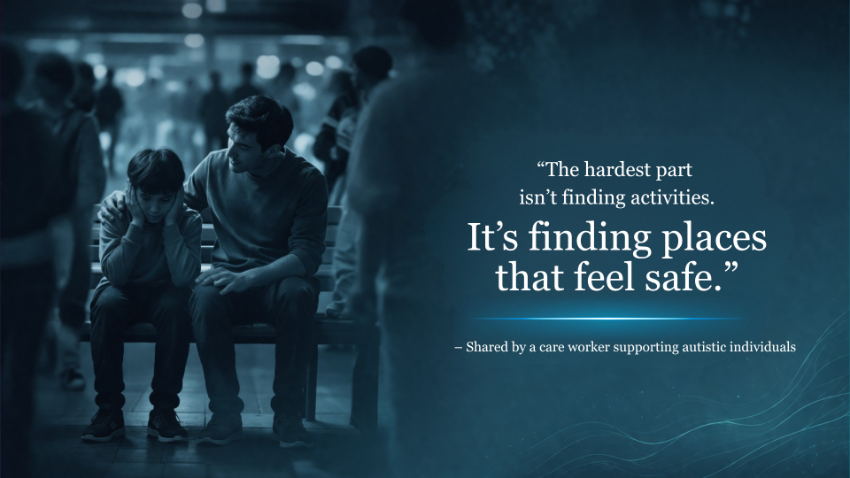
Going somewhere new can feel like a risk.
A café might be too loud. A park too crowded. A gym too overwhelming.
For many autistic people, carers, and families, that uncertainty is often enough to stay home entirely.
My brother works as a carer. A close friend is autistic and has an autistic child. Despite very different lives, they faced the same question every time they left home:
Will this place be manageable?
There was no reliable way to know before arriving. Just memory, experience, and sometimes a difficult journey home.
I'm Dr Sai Raj Ali, founder of MindHaven.
When my dissertation supervisor had to step back due to serious illness, I made the decision to build MindHaven as my research. That decision changed everything.
During my MSc research at Middlesex University London, I began exploring whether publicly available environmental data could help answer that question before someone left home.
The challenge is not the person. The challenge is the lack of information available before they arrive.
The result was MindHaven.
The Solution
MindHaven helps people discover places that may offer lower sensory load before they leave home.
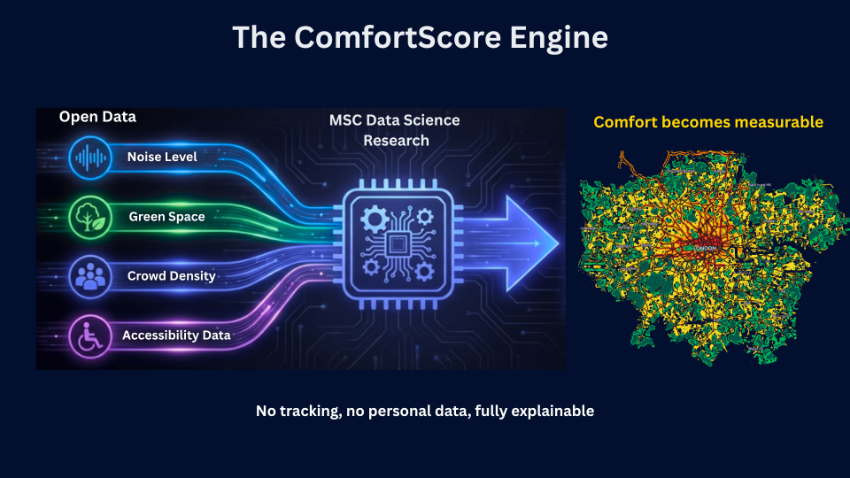
Using publicly available UK environmental data, MindHaven scores 197,130 locations across London based on four factors that influence sensory comfort:
- Noise levels
- Green space
- Crowd pressure
- Physical accessibility
Every location receives a ComfortScore, helping users quickly identify places that may better suit their needs.
Users can also create a NeuroPassport, a private sensory profile stored entirely on their own device. No personal sensory data is sent to our servers.
The goal is simple:
Helping people feel more confident about where they go before they get there.
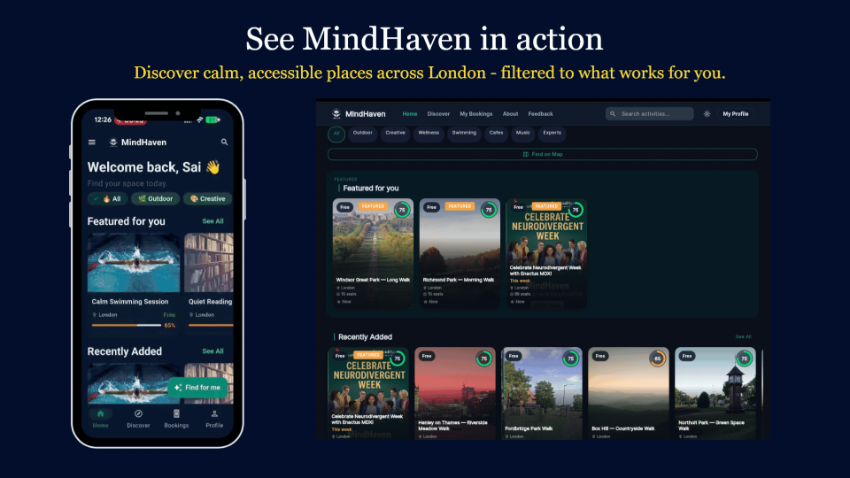
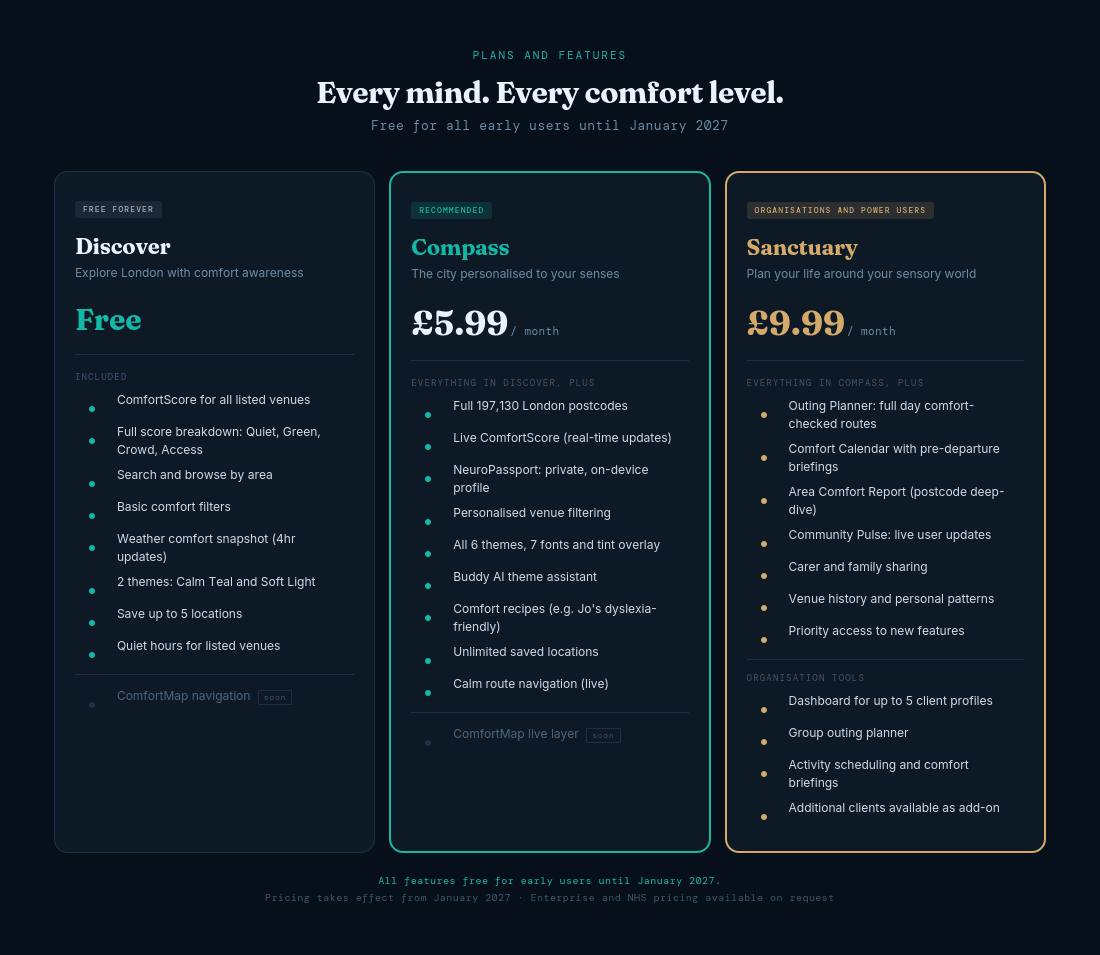
MindHaven is designed to support different levels of need, from casual exploration to personalised sensory planning and care support.
The comparison below shows how Discover, Compass, and Sanctuary differ.
Why MindHaven Is Different
Most accessibility tools focus on physical access.
MindHaven focuses on environmental comfort.
Rather than relying on reviews or guesswork, MindHaven combines multiple sources of public environmental data to estimate how a place may feel before arrival.
It is not a review platform.
It is not a venue directory.
It is a decision-support tool built for the moment before someone leaves home and asks:
"Will this place be okay for me?"
Where We Are Now
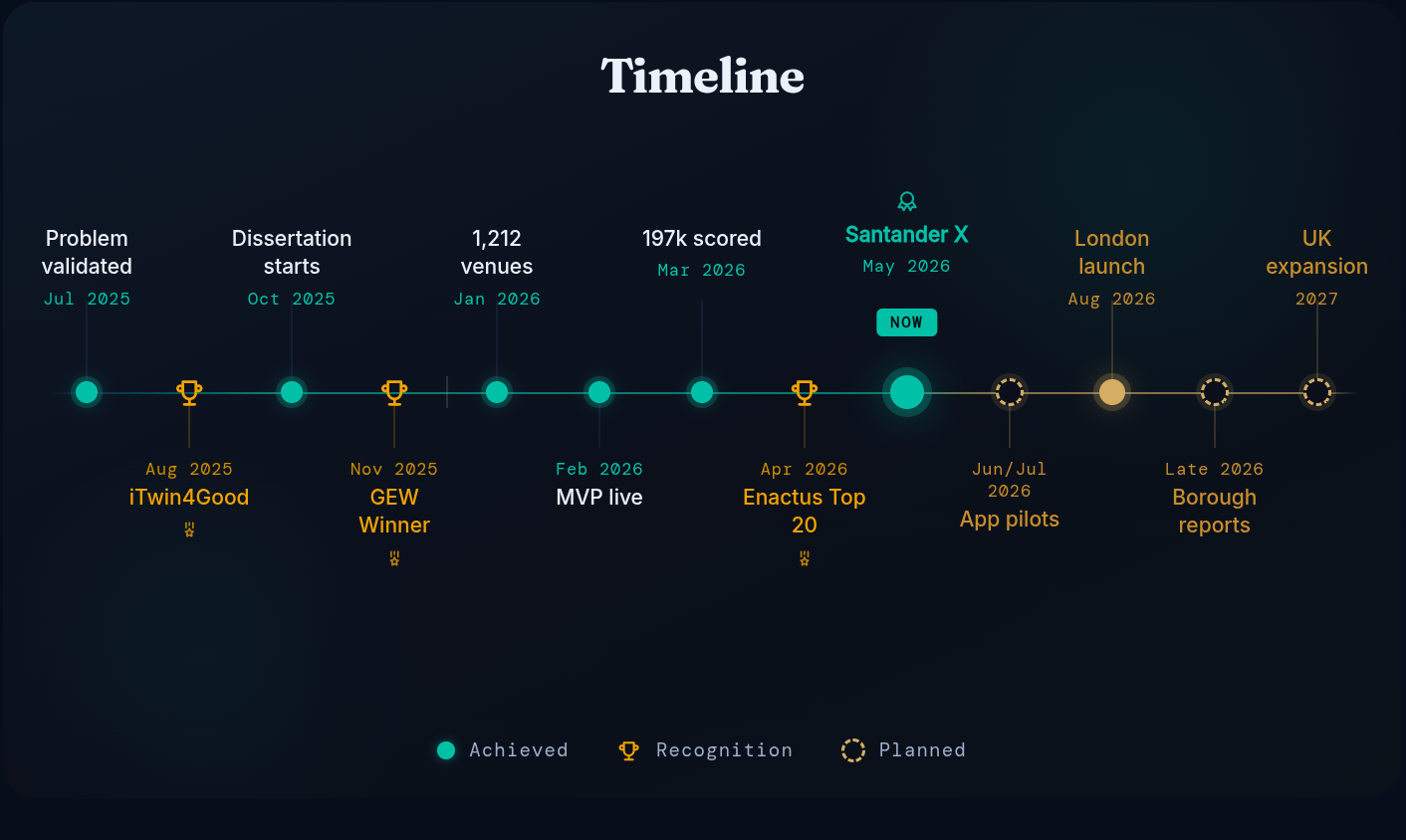
MindHaven has been built through academic research, community conversations, and support from Middlesex University London and Enactus UK & Ireland.
Our ComfortScore methodology was validated across 1,212 London venues as part of dissertation research.
During testing, most participants reported feeling more confident planning outings after using MindHaven, and the vast majority said they would use a tool like this regularly.
The platform has already mapped and scored 197,130 London locations.
This campaign is about getting that work into the hands of the people who need it.
Who We Are
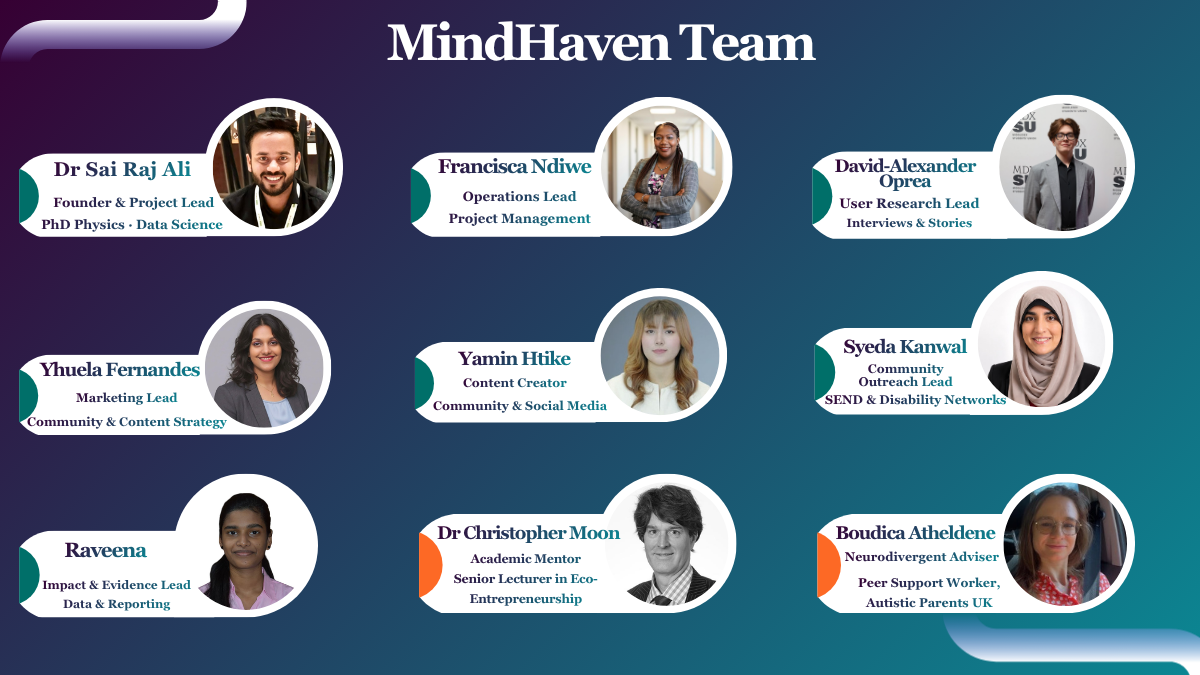
MindHaven is led by Dr Sai Raj Ali and supported by researchers, technologists, and community advocates through the Enactus Middlesex programme.
Our work has been supported by Middlesex University London and Enactus UK & Ireland.
We are grateful for recognition from Santander X Explorer, Bentley iTwin4Good, and Enactus UK Nationals 2026, which have helped us develop and validate the project.
Project needs
What We Will Do With The Money
MindHaven already exists.
This campaign is not about starting from scratch. It is about launching, testing, and reaching the communities who need it most.
Minimum Goal: £500 - Reaching the people who need it most
The first £500 will help us:
- Publish MindHaven on Android and iOS
- Produce printed awareness and outreach materials
- Attend community events and SEND networks across London
- Begin engagement with care homes and community organisations
Optimal Goal: £3,000 - A Full Year of Protected Growth
At £3,000 we can:
- Sustain the platform during its first year of operation
- Expand testing with care homes and community organisations
- Produce accessibility and outreach materials
- Continue community engagement and feedback activities
- Publish public reports on outcomes and learning
If We Exceed £3,000
Additional funding will support:
- Accessibility improvements
- Independent accessibility reviews
- Trademark protection
- Expansion of ComfortScore validation into additional boroughs
If We Do Not Reach Our Goal
All contributions are returned in full.
If we do reach our goal, we will publish transparent updates showing how funds were spent, what was delivered, and what comes next.
Privacy First
Privacy has been part of MindHaven from the beginning.
Your NeuroPassport remains on your device.
No personal sensory profile is sent to our servers.
Where AI is used, it works only with public and anonymised environmental information.
Your sensory preferences stay private.
The city becomes easier to navigate.
Thank You
MindHaven exists because carers, autistic adults, families, researchers, students, and community organisations shared their experiences and trusted us with their insights.
Every donation helps move MindHaven from research into real-world impact.
Together, we can make cities kinder for every mind.
Help us spread the word about this project. Share it on your social media.
Thank you!
These 21 contributors have already supported the Project:




Por ahora no hay ninguna novedad publicada.
-
DONATE NOW
Support this project with a donation
-
£5.00
Community Ally
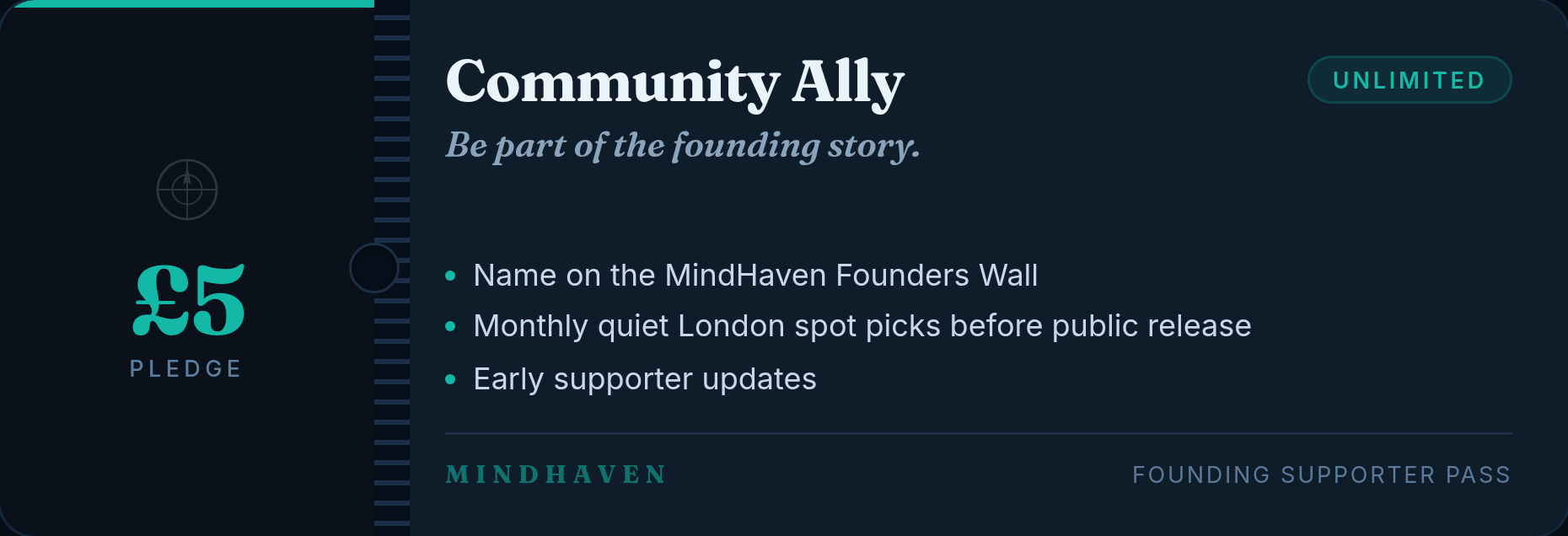
Support the launch of MindHaven.
Includes:
- Your name on the Founders Wall
- Three quiet London spot recommendations every month
- Early supporter updates
-
£10.00
Sensory Scout
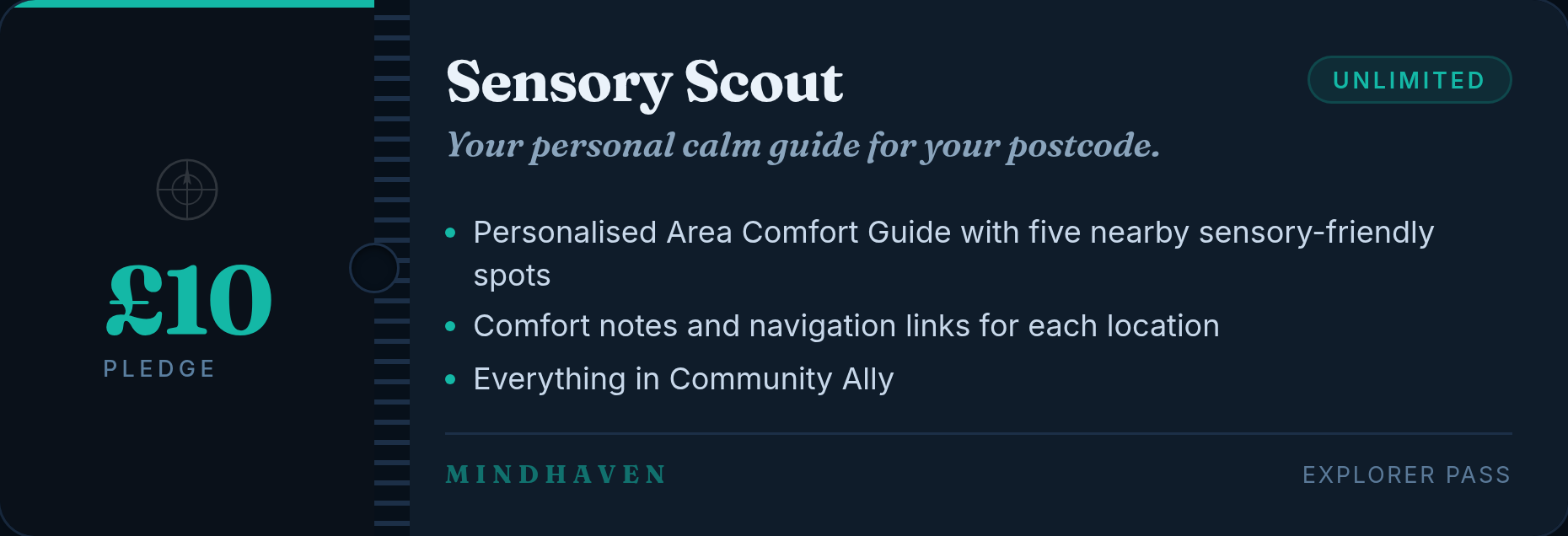
Your personal calm guide for your postcode.
- Personalised Area Comfort Guide with five nearby sensory-friendly spots
- Comfort notes and navigation links for each location
- Everything in Community Ally
-
£25.00
Founding Member
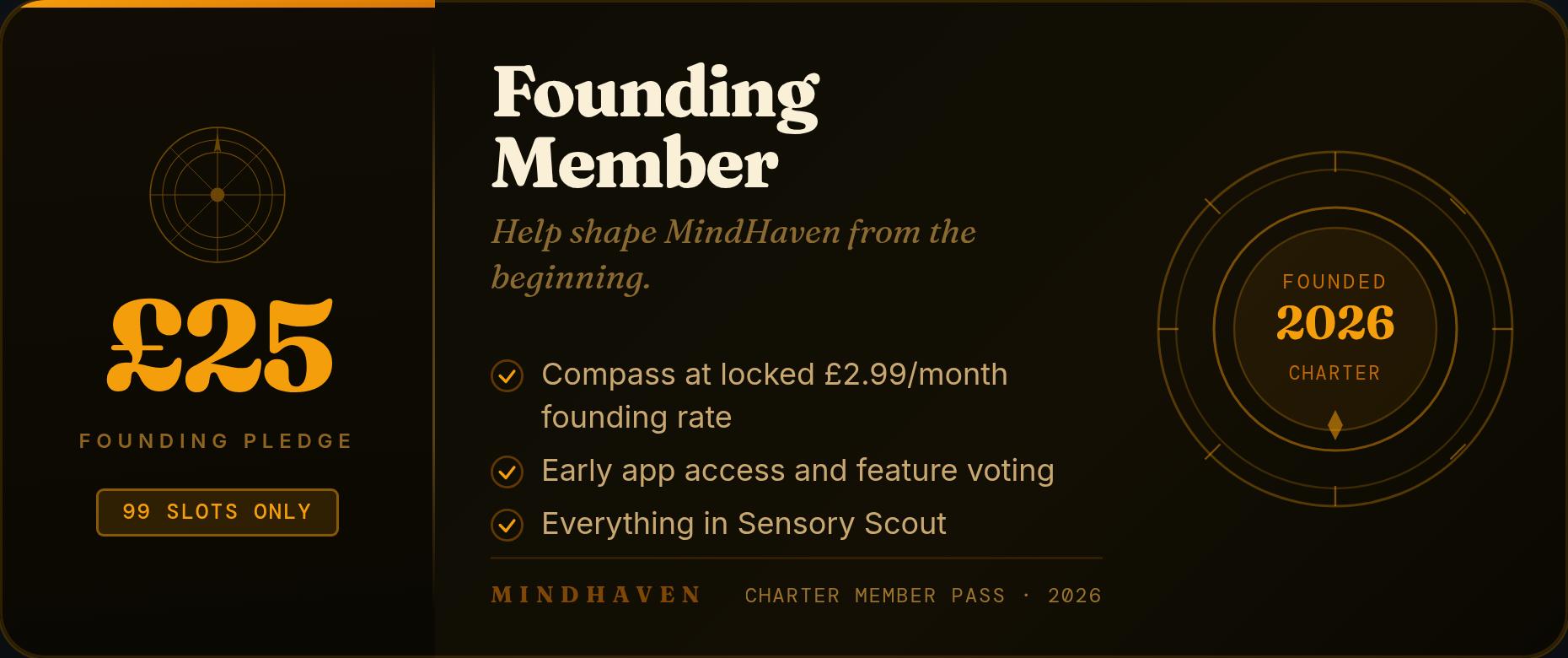
Help shape MindHaven from the beginning.
- Lifetime access to Compass at our founder rate of £2.99/month
Compass includes NeuroPassport, personalised venue recommendations, calm route navigation, and unlimited saved locations - Early app access and feature voting
- Everything in Sensory Scout
Once these 99 slots close, this pricing will not return.
- Lifetime access to Compass at our founder rate of £2.99/month
-
£40.00
Compass Annual
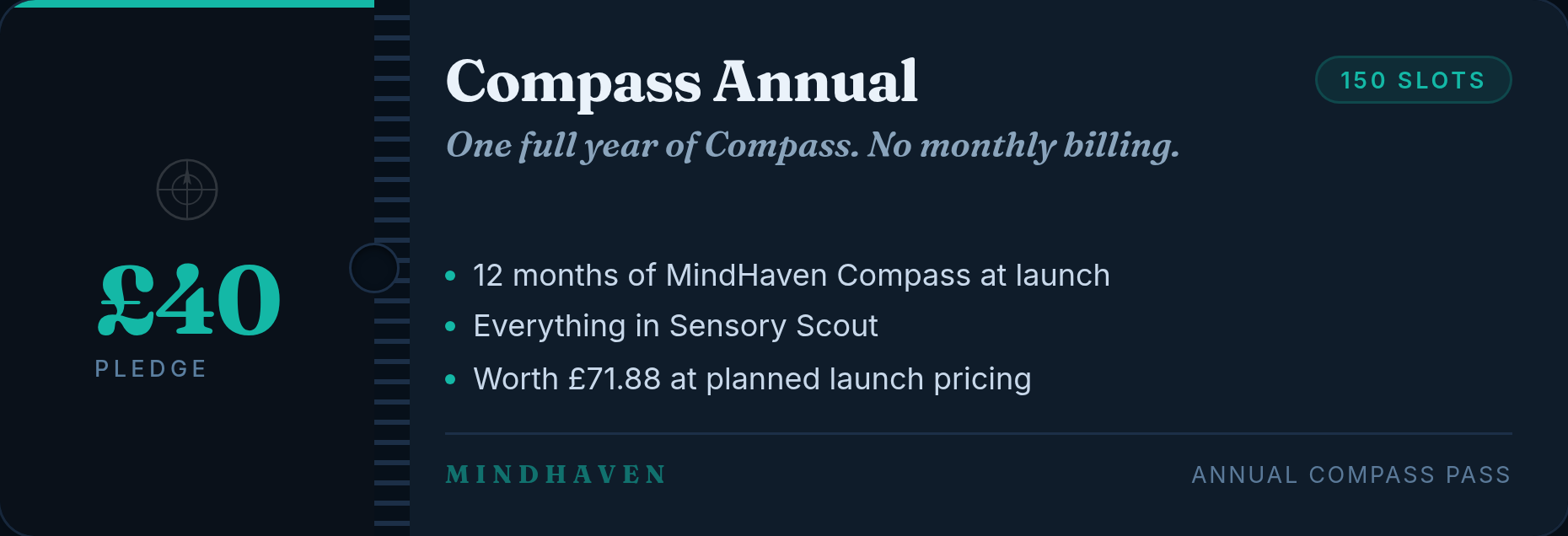
One full year of Compass. No monthly billing.
- 12 months of MindHaven Compass at launch
- Everything in Sensory Scout
Worth £71.88 at planned launch pricing.
-
£75.00
Compass for Life - 50 slots only
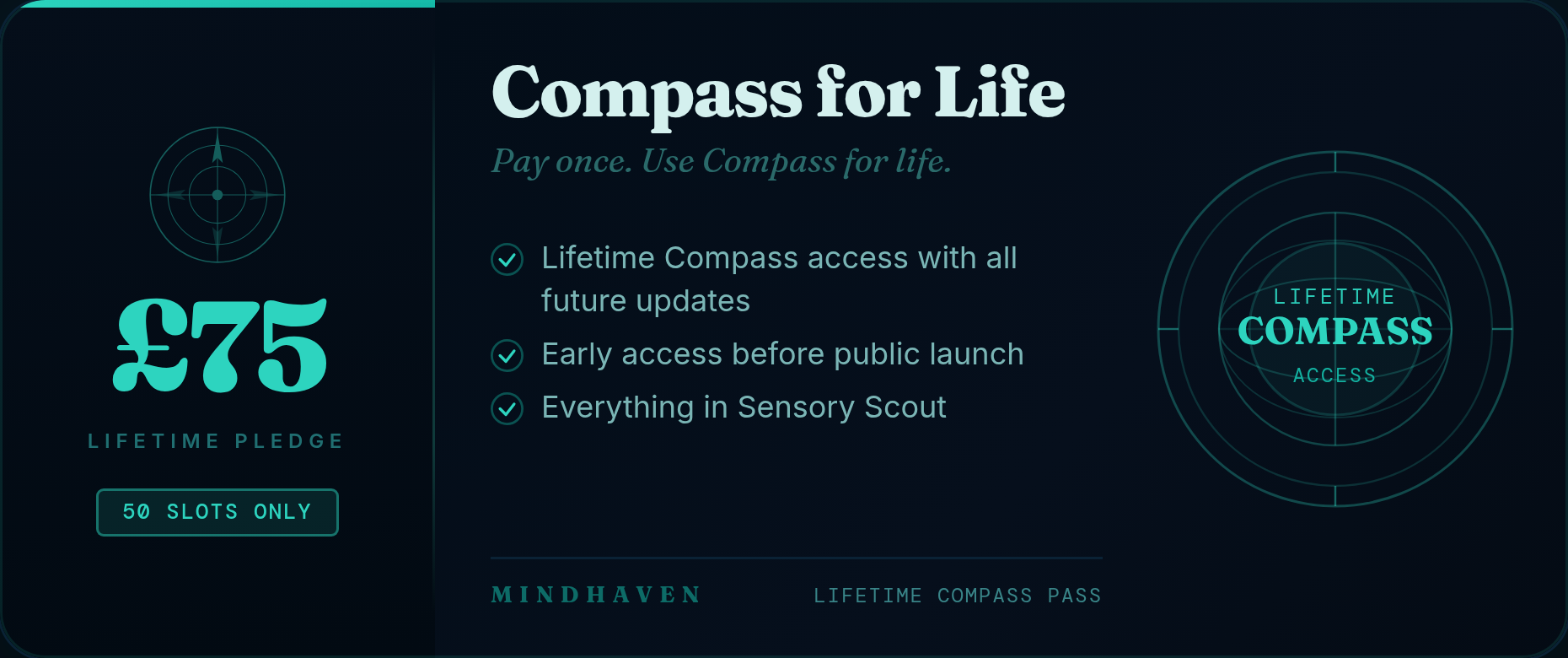
Pay once. Use Compass for life.
- Lifetime Compass access with future Compass updates
- Early access before public launch
- Everything in Sensory Scout
-
£100.00
Care Home Partner - 25 slots only
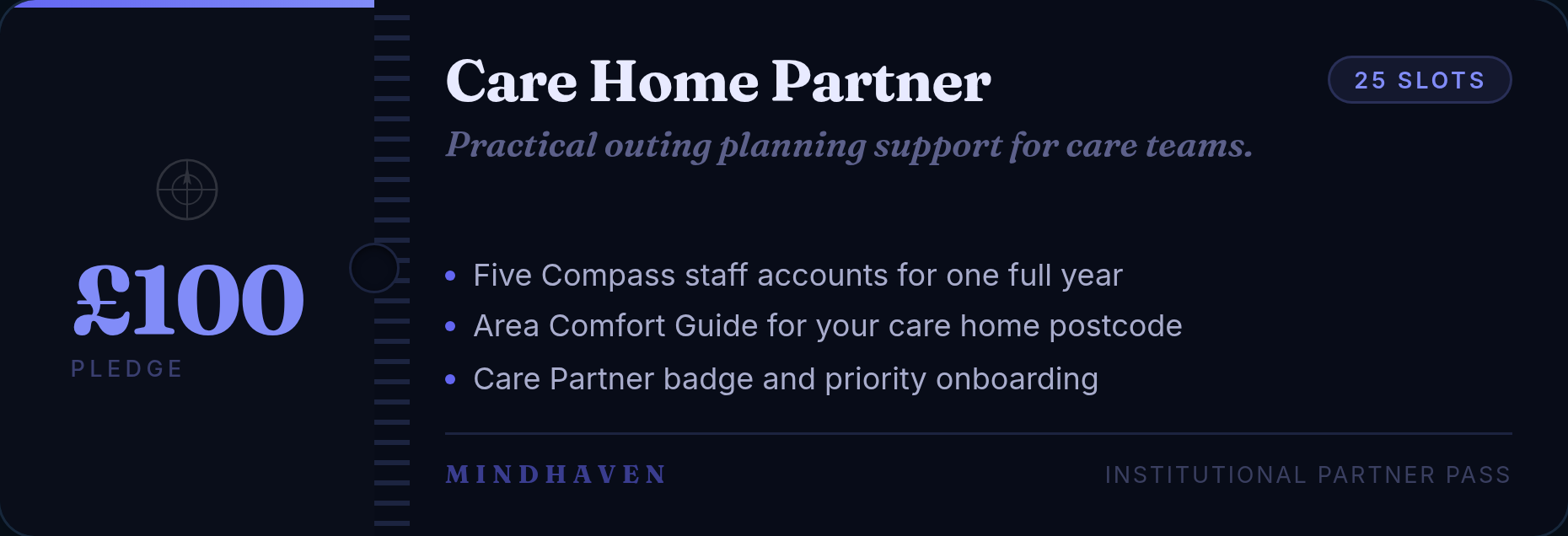
Practical outing planning support for care teams.
- Five Compass staff accounts for one full year
- Area Comfort Guide for your care home postcode
- Helping care teams plan more comfortable outings for the people they support
- Care Partner badge and priority onboarding
-
£150.00
Sanctuary for Life - 30 slots only
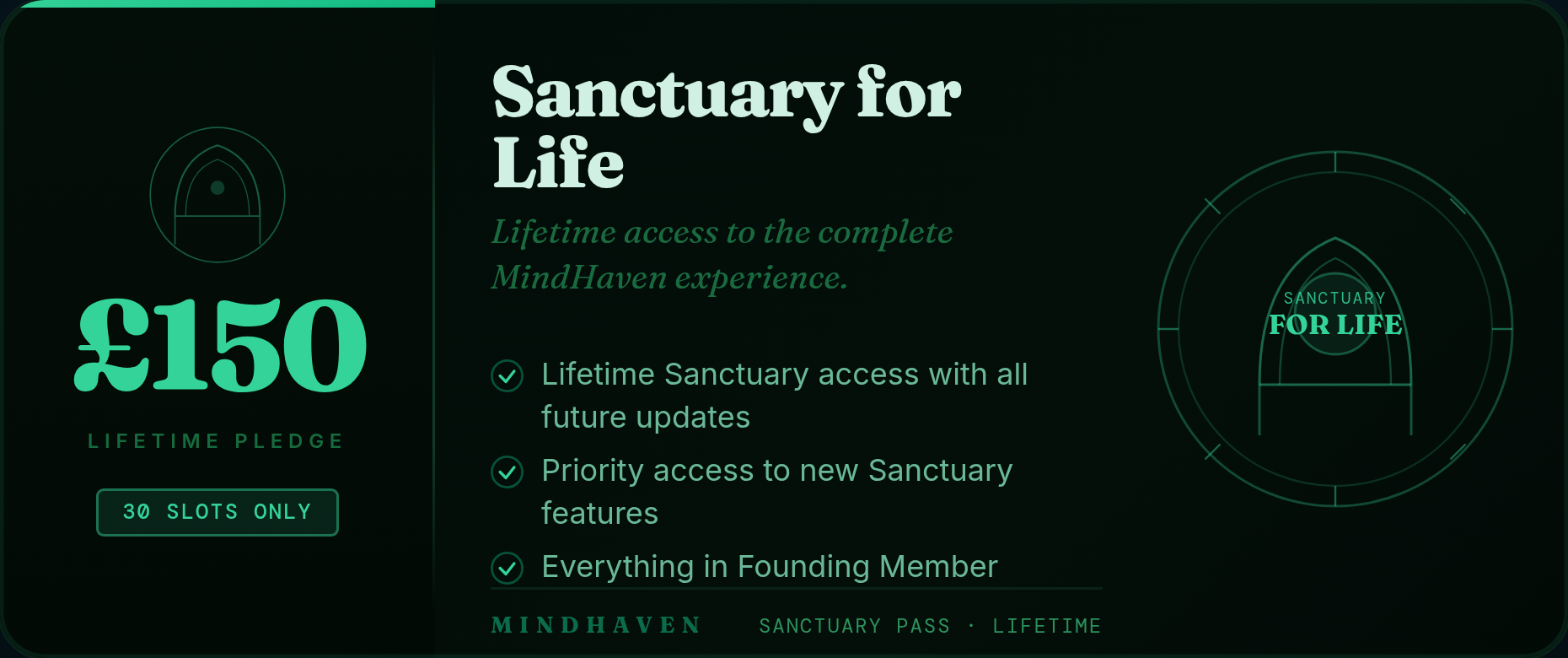
Lifetime access to the complete MindHaven experience.
- Lifetime access to Sanctuary and all future Sanctuary features
- Designed for carers, families, and advanced users
- Outing planning tools and comfort calendars
- Family sharing and deeper comfort insights
- Priority access to new Sanctuary features
- Everything in Founding Member
Compass launches first. Sanctuary features roll out progressively after launch. -
£150.00
Venue Partner - 20 slots only
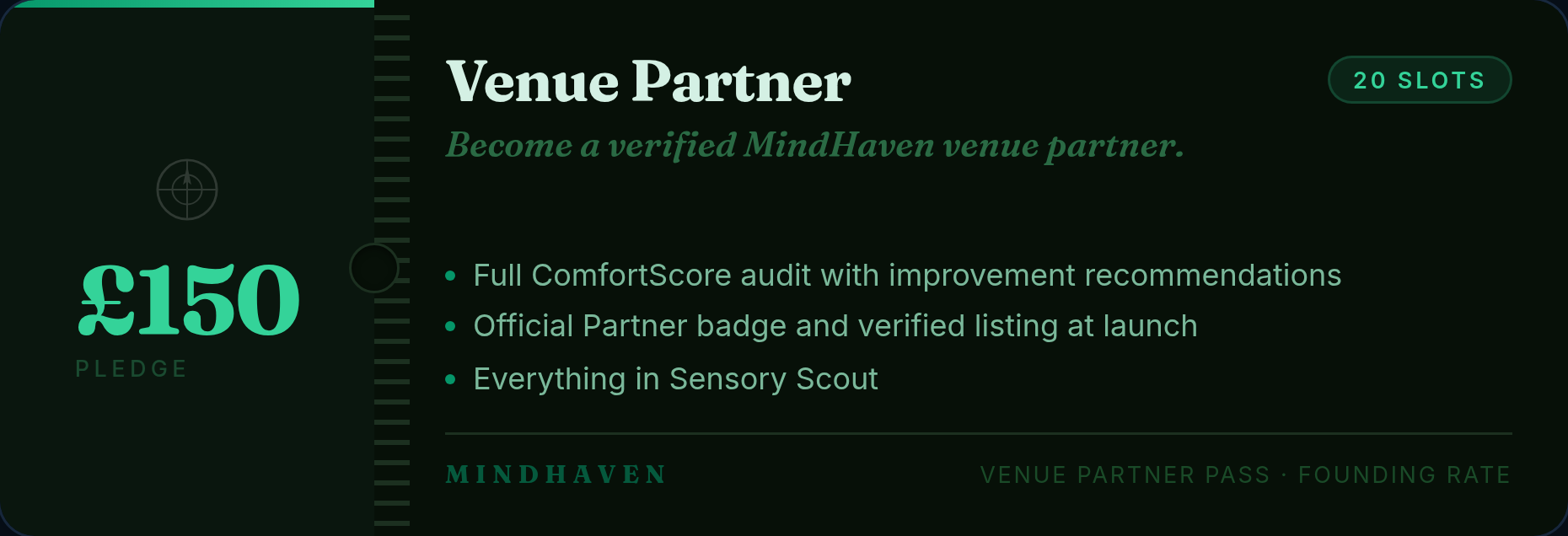
Become a verified MindHaven venue partner.
- Full ComfortScore audit with practical recommendations
- Suggestions to help create a more comfortable environment for visitors
- Official Partner badge and verified listing at launch
- Everything in Sensory Scout
This founding rate will not be available after launch.
-
Outreach Connectors
Starts July 16 · 4–6 weeks · 1–2 hrs/week
You open doors through people you already know.
- Make warm introductions to care homes, SEND networks, Neurodiversity or autistic community groups
- Share MindHaven via email or WhatsApp
- One 30-minute alignment call with Sai
No technical skills. Just trust and a few messages.
-
Community Test Users
No app to install yet. Just say you're in. Starts: first week of July.
For neurodivergent people, carers, family members, and professionals.
- Try MindHaven early, at your own pace
- Quick feedback form, no pressure
- Optional 30-min Zoom/Teams call with the MindHaven team
- Optional: join our WhatsApp Channel for updates
https://whatsapp.com/channel/0029Vb7UydS2f3ESOQzbIT1T
-
Press & Media
Starts August 1 · 1–2 weeks · 1 hr
Journalists, bloggers, and creators covering disability, neurodivergence, accessibility, or social enterprise.
- Receive a full press briefing pack
- Optional 45-minute briefing call with Sai
- Coverage angle and timeline fully independent
We're asking for an introduction to your audience, not a specific story.

Middlesex University London, The Burroughs, London, NW4 4BT